
What is Homicide? Goss Law Weighs In

Homicide is one of the most serious crimes recognized under criminal law. What is homicide, though?
It's the act of one human being causing the death of another. This can be done intentionally or through a negligent act. There are very serious consequences associated with homicide charges. This is why it's very important to have an understanding of how homicide is defined under the law.
California Penal Code defines crimes in the state and how each type of crime is handled by the courts. Those who are charged with a homicide, or those who believe they might be charged, should contact a trusted homicide defense attorney. They can also consult on defenses to homicide in CA.
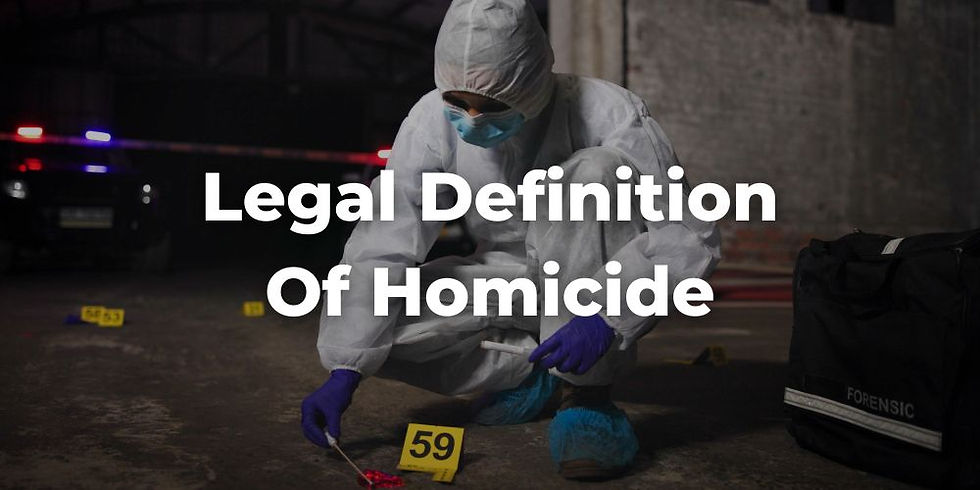
Legal Definition of Homicide
Under California Penal Code Section 187 homicide is legally defined as: "the unlawful killing of a human being or fetus with malice aforethought."
The phrase “malice aforethought” is important, as it refers to a critical part of these crimes: intent. What does this mean? It means that in order to be convicted of the crime of homicide, a prosecutor must prove that the killing was an intentional killing.
However, the state recognizes that sometimes there are lawful killings, or justifiable homicide, which means the killing occurred in self defense or in the defense of another person. These might also be referred to as excusable homicides. These are tried and sentenced in very different ways when compared to criminal homicides, which are unlawful, intentional, and referred to as crimes like murder or manslaughter.
Since not all homicides are criminal, this is another reason to work with an attorney. There are several defenses that can be used for both murder and manslaughter or excusable homicide.
Types of Criminal Homicide in California
There are different types of criminal homicide charges, and each of them have unique legal elements, penalties, and other details.
In California, the primary classifications are:
First-Degree Murder
First-degree murder is the most serious homicide charge, and it comes with very harsh penalties. It involves a willful, deliberate, and premeditated murder. This means that the defendant planned to kill the victim before they did it...even if the plan was made in a split second decision. If prosecutors can show that the accused had an intention to kill the victim, they can use a first-degree murder charge.
There are also situations where an unintended killing could be elevated to first-degree murder thanks to the felony murder rule in the state. This means that if a death occurred during another felony act, such as a violent felony like rape or other felony, like burglary, and someone dies, the accused could see a first-degree murder charge...even if the death was totally unintentional.
Penalties for first-degree murder include 25 years to life in the state prison system and life in prison without the possibility of parole.
If the charge is capital murder, which means the crime was a first-degree murder, but there are special circumstances, it may include life without the possibility for parole and even the death penalty. Currently, there is a moratorium on executions, but these punishments are still being given. Some of these special circumstances surrounding the murder that can elevate it to capital punishment include the killing of a police officer or elected official with clear intent, murder during a drive-by shooting, murder for financial gain, or murdering multiple people.
Second-Degree Murder
In a second-degree murder, it is not a premeditated crime, but intent is still involved. This includes an intention murder that is impulsive or reckless. It can also be an action that demonstrates a "conscious disregard for human life."
An example of this might be a man who gets into a heated argument at a bar. He pulls out a gun and shoots the other person in a moment of anger—without planning it in advance.
Sentencing for second-degree murder generally ranges from 15 years to life imprisonment.
Voluntary Manslaughter
Voluntary manslaughter is a lesser charge than murder. It is often applied when a killing occurs in the heat of the moment or with provocation. With this charge, it is acknowledged that the accused had an extreme emotional disturbance at the time of the homicide, and that can reduce their culpability.
An example of this is a wife who discovers her husband's affair and is so distraught that she kills him or his lover.
Sentences of voluntary manslaughter range from 3 to 11 years in state prison.
Involuntary Manslaughter
Involuntary manslaughter involves a killing that is unintentional and results from criminal negligence or recklessness. This might include a death caused by reckless driving or negligent behavior.
An example of this is: a man is cleaning his loaded gun in his living room while his friend is sitting nearby. He fails to follow basic safety protocols, doesn’t check the chamber, and accidentally fires the weapon. The bullet strikes and kills his friend. The accused did not intend to kill his friend, but he committed a crime and caused death due to his negligence.
Sentencing for involuntary manslaughter, which is an unintentional killing, usually ranges from 2 to 4 years in prison.
Vehicular Manslaughter
Vehicular manslaughter is a type of involuntary manslaughter that occurs when negligently operating a motor vehicle with death resulting from these actions. Many times, a suspect in a DUI-related fatality will be charged with this crime. These can be charged as a misdemeanor or a felony. A misdemeanor carries up to a year in jail and a felony can carry up to 10 years in prison.
Justifiable and Excusable Homicide
California law understands that not all killings are criminal. There are certainly circumstances where a killing is lawful. Goss Law can provide insight on the elements of homicide in CA.
Justifiable Homicide
A justifiable homicide is one where a person kills another in self-defense or in the defense of another. The key here is that the person reasonably believes that deadly force is necessary to prevent their own death or serious injury.
An example of justifiable homicide is this - A homeowner wakes up in the middle of the night to find an armed intruder breaking into their home. The intruder threatens the homeowner with a weapon. Fearing for their life and the lives of their family, the homeowner shoots and kills the intruder.
There are no criminal charges for a justifiable homicide.
Excusable Homicide
An excusable homicide is one that refers to a death that results from a lawful act that occurs without intent nor criminal negligence.
An example of excusable homicide is this: Two friends are hiking in a remote area, and one of them is legally carrying a firearm for protection against wildlife. While carefully trying to navigate rough terrain, the firearm accidentally discharges and fatally wounds the other friend. There was no criminal intent, no recklessness, and the person exercised ordinary caution throughout.
There are no criminal charges for an excusable homicide.
Common Defenses to Homicide Charges
Anyone facing a homicide charge should reach out to a top criminal defense lawyer, even if the homicide was an accident or justifiable.
Here are some of the ways an attorney will defend their client in a homicide case:
Self-Defense or Defense of Others
This is a very powerful defense in homicide cases. When a defendant believes that deadly force was necessary to protect themselves or other people, it could be found to be legally justified. The defense attorney will have to show that the defendant's perception of the threat was reasonable and that the force was appropriate.
Accident or Lack of Intent
An attorney may also use an accident or lack of intent defense for their client. This means that they will have to show that the killing was not intentional and that it was done without reckless behavior or criminal negligence. If the death was an accident and the activity was lawful, the charges could be dismissed or reduced.
Insanity or Diminished Capacity
There is also the insanity defense, which may be used. If the defendant doesn't have the capacity to understand that what they did was wrong, or they do not have the mental capacity to understand it due to mental illness, they may be found not guilty by reason of insanity. In this case, the defendant is often hospitalized for treatment.
Mistaken Identity
A defense attorney may also be able to use a mistaken identity defense. This can be the case if there was unreliable eyewitness testimony, flawed forensic evidence, or the defendant had an alibi that shows they were not at the scene of the crime.
Contest the Prosecution's Claims
Finally, an attorney will contest the prosecution's claims of intent or malice, which can lead to reduced charges. For instance, a murder charge can be reduced to manslaughter.
Sentencing and Consequences - More Details
Sentencing for a homicide conviction varies widely depending on the specific charges. Other factors that might come into place include the circumstances and any mitigating or aggravating factors. The law offers a range of penalties for courts to follow, which are designed to reflect how serious an offense is and how culpable a defendant is.
First-degree murder carries the most severe penalties, including life imprisonment without the possibility of parole (LWOP) or, historically, the death penalty, which is currently under moratorium in California. Individuals convicted of first-degree murder face mandatory sentences of 25 years to life or longer. These can become capital murder if the death occurs during other crimes, like a robbery.
Second-degree murder convictions typically result in sentences ranging from 15 years to life in prison. Sentences may be enhanced for use of firearms, prior convictions, or involvement in criminal street gangs, which can significantly increase the time served.
Voluntary manslaughter generally carries prison terms between 3 and 11 years. Sentencing is often influenced by the specifics of the action that led to the killing.
Involuntary manslaughter convictions carry lighter sentences, usually between 2 and 4 years in prison, reflecting the unintentional nature of the offense. However, negligent conduct, such as reckless driving resulting in death, can lead to significant penalties.
Vehicular manslaughter sentences depend on whether the crime is charged as a felony or misdemeanor. Felony vehicular manslaughter can lead to up to 10 years in prison, while misdemeanor charges usually carry sentences of up to one year in county jail.
In addition to imprisonment, homicide convictions have long-term consequences, including loss of voting rights, prohibition on firearm ownership, difficulty securing employment, and social stigma. For non-citizens, convictions may lead to deportation or denial of naturalization. Civil cases may also come into play.
Because of these consequences, it is critical for anyone facing homicide charges to get expert legal representation. Goss Law in Sacramento provides clients with experienced counsel to navigate the complexities of sentencing and advocate for the best possible outcome.

Importance of Legal Representation from Goss Law
Homicide laws are very complex, and the severe penalties involved make it crucial to obtain skilled legal representation. Homicide cases often involve intricate factual and legal issues that require a very detailed and strong defense strategy. From the initial investigation to trial and potential appeals, experienced attorneys play an essential role in safeguarding a defendant’s rights and ensuring due process.
Goss Law in Sacramento is recognized for its deep expertise in criminal defense, particularly in homicide cases. The firm approaches each case with thorough investigation and meticulous attention to detail, seeking to uncover evidence that may support defenses such as self-defense, lack of intent, or procedural errors by the prosecution. Blair Goss and his team are also experts at negotiating with prosecutors to pursue favorable plea agreements when appropriate.
Homicide trials can be emotionally charged and legally complex, requiring strong courtroom advocacy skills. Goss Law’s legal team provides compassionate guidance and strategic counsel, ensuring clients understand their options and the potential consequences at every stage.
Facing homicide charges without experienced legal counsel can jeopardize a defendant’s future. Effective representation, like that provided by Goss Law, can mean the difference between conviction and acquittal, reduced charges, or more lenient sentencing. Call today for a free consultation.