
Is California a Stand Your Ground State?

Many people have heard the term "Stand Your Ground," especially after high-profile criminal cases involving self-defense claims. However, what people don't know is this: Is California a "Stand Your Ground" state?
California does not have an official "Stand Your Ground" law like other states, but there are still similar laws that residents should be aware of, especially in self-defense situations, as the state's self-defense laws can be complicated.

What Do “Stand Your Ground” Laws Mean?
A Stand Your Ground law is one that means a person doesn't have the legal duty to retreat before using force to defend themselves if they are lawfully present. In states where there are traditional Stand Your Ground laws, the law often specifically says that someone can meet force with force instead of attempting to retreat or escape.
However, it doesn't mean that people can legally use force anytime they feel threatened. Self-defense laws still require certain conditions to be met. In most cases, for a self-defense claim to be valid, the following must occur:
An immediate threat
A reasonable fear of harm
Force that is proportional to the threat
Lawful behavior by the person claiming self-defense
Even in states with strong Stand Your Ground protections, self-defense claims are still heavily investigated.
California Law and Self-Defense
California doesn't have a separate Stand Your Ground law. However, courts in the state have recognized for many years that a person who is lawfully present does not necessarily have a duty to retreat before they defend property, themselves, or others.
In fact, California's legal framework specifically used jury instructions that state a person that is threatened with attack my stand their ground and defend themselves if reasonably necessary.
In other words, though California doesn't necessarily have a Stand Your Ground law on the books, the law here functions very similarly to many states that do have these laws.
That being said, however, self-defense protections have limits. The key issue in most cases is whether or not the person had a reasonable belief that there was an imminent threat of bodily harm, and whether proportional force was used.
When Is Self-Defense Legal in California's Legal Framework?
Under California law, self-defense may apply when someone reasonably fears imminent bodily harm. This means that they feel like they are in danger of being killed, suffering great bodily injury, or becoming the victim of unlawful force.
For instance, a person who is physically attacked may have the right to use proportional force to stop the attack...and that's the key word here - "proportional force."
A person may feel imminent danger of being hit in the face and getting a black eye. That does not mean they can use lethal force to defend themselves. Courts often look at these cases from the perspective of a "reasonable person." This means, if an average person would believe they would be killed, lethal force would be accepted. However, if a reasonable person knew that they would get a black eye if someone else punches them in the face, it's very unlikely lethal force would be appropriate.
No Duty to Retreat
One of the most confusing parts of self-defense in California involves retreat. Generally, a person does not need to run away before defending themselves if they are lawfully present and reasonably believe that they are in immediate danger of substantial physical injury or to prevent imminent death. This means that a person may legally stand their ground in certain situations.
However, it's important to remember that prosecutors will will look at whether or not their response was appropriate. Even without a duty to retreat, excessive force can still lead to criminal charges, which is why people in these situations often need the best criminal attorneys in Sacramento working for them.
The Castle Doctrine in California
California also recognized the Castle Doctrine, which applies to self-defense inside of a residence.
Under California law, a person may be presumed to have a reasonable fear of imminent danger if someone gets into their home by using unlawful and forcible entry. This can strengthen a self-defense claim in home invasion situations.
However, it's also important to know that such force isn't always justified. Courts will still look at whether the threat was an immediate threat and if the response was a reasonable one.
Self-Defense in Assault Cases
Self-defense arguments are common in assault and battery cases. Someone charged with crimes like assault with a deadly weapon or aggravated battery may claim that they felt that they were in imminent harm and needed to protect themselves.
In these cases, investigators often review:
Surveillance footage
Witness statements
Medical records
911 calls
Police body camera footage
Prior interactions between the parties
Even when someone believes they acted lawfully, law enforcement officers may still make an arrest if the situation appears unclear or if serious injuries occurred.
Self-Defense in Homicide Cases
Self-defense can also become a major issue in homicide investigations.
A person charged with murder or manslaughter may argue they used deadly force because they reasonably believed they faced imminent death or serious bodily injury.
These cases are often extremely fact-specific.
Prosecutors may attempt to argue:
The threat was not immediate
The defendant used excessive force
The defendant was the aggressor
The confrontation could have been avoided
The defendant acted out of anger or revenge
A successful self-defense claim may lead to reduced charges, dismissal, or acquittal depending on the evidence.
Initial Aggressors and Self-Defense
California self-defense protections become more limited when the person claiming self-defense started the confrontation.
Someone who initiates violence may lose the right to later claim self-defense.
However, there are situations where self-defense rights may be restored. For example, if the original aggressor clearly attempts to withdraw from the confrontation and the other person continues the attack, the legal analysis may change.
These cases can become complicated quickly because witness accounts often conflict.
Why Evidence Matters
Evidence plays a major role in self-defense cases.
Important evidence may include:
Surveillance video
Cell phone footage
Witness testimony
Medical evidence
Forensic evidence
Text messages
Social media posts
In many situations, the physical evidence may support or contradict a person’s version of events.
Because self-defense cases often involve conflicting stories, prosecutors and defense attorneys closely examine every detail surrounding the incident. They also can consult on questions such as What is a blood split motion in CA?
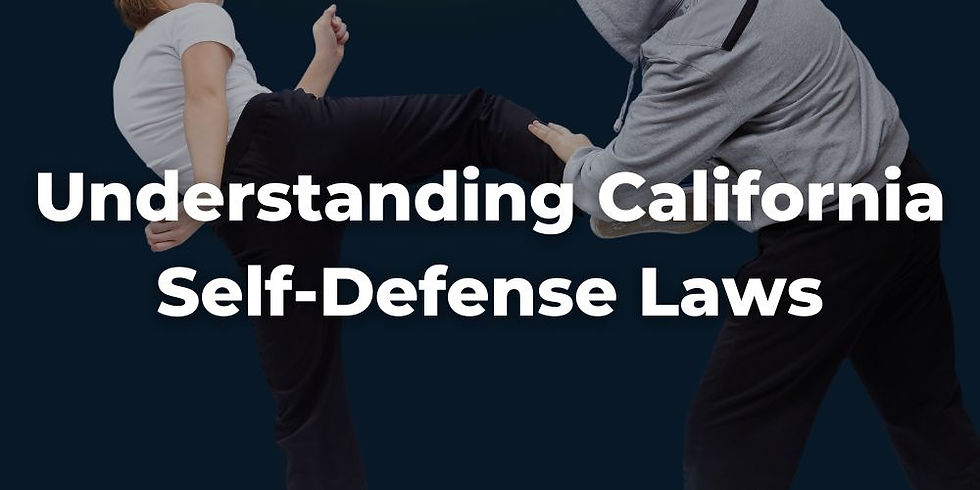
Understanding California Self-Defense Laws
California is not considered a traditional Stand Your Ground state because it does not have a specific Stand Your Ground statute. However, California law generally does not require a person to retreat before using reasonable force in self-defense. Goss Law can also help with questions like does california have castle doctrine?
Whether force was legally justified depends on several factors, including whether the threat was immediate, whether the fear of harm was reasonable, and whether the response was proportional to the danger involved.
Self-defense claims are often aggressively challenged by prosecutors, especially in cases involving serious injuries or fatalities.
For individuals facing violent crime charges in Sacramento, understanding California’s self-defense laws can be an important part of protecting their rights after an arrest or criminal investigation. Reach out to Goss Law if you are facing these charges and let's look at the case to find out if self-defense laws might apply. Free consultations are available.